Uncredited Navajo Artist

According to a contemporary newspaper report, “a young Navajo painter” was selected by New Mexico’s New Deal art program in 1939 “to aid in a sandpainting reproduction on the ceiling of the entrance hall”1 of the McKinley County Courthouse built that same year (as a New Deal project itself). That newspaper article is the only known documentation for what is actually a series of sixteen Diné (Navajo) sandpainting-style wall paintings covering the first floor of the historic courthouse. Importantly, it names the artist of the courthouse’s other major mural, Lloyd Moylan, along with a New Deal art administrator and art instructor. The name of “the Navajo painter”—as they are referenced in the article—has yet to be recovered, however.

The fact that Native artists such as Harrison Begay, Timothy Begay, Allan Houser, and Jose Rey Toledo were publicly credited for their work by the New Deal, but the anonymous courthouse muralist was not, reveals the prevailing attitudes and biases of the era. The New Deal Native artists whose names we know were trained in a U.S. government school to produce Western art-style easel paintings and murals. Their artwork thus fits the Eurocentric definition of “fine art” espoused by the New Deal, and they were recognized in the same manner as their white artist counterparts: by name as individual creators.

New Deal artists like the anonymous courthouse muralist, making what were considered the “folk” or “lesser” forms of “handicraft,” “decorative,” and/or “traditional” arts, however, did not receive the same kind of recognition. As the above-referenced newspaper article reveals, the anonymous courthouse muralist’s sandpainting designs were seen as “reproductions,” not originals. Misconceptions of “traditional” Native arts as utilitarian and/or not imaginative or innovative persist today. Weaving, pottery, basketry, and jewelry, for example, are still often viewed not as singular works of art but as expressions of entire cultures and world views, and are still caught up in ideas of “authenticity” that prioritize conformity to historical standards. 

Uncredited Hispano Artist

Generally speaking, New Deal art programs distinguished between “fine art” and “craft,” employing artists and producing work on the basis of a false dichotomy rooted in racial and class biases. As Tey Marianna Nunn details in her authoritative work on the subject, Sin Nombre: Hispana & Hispano Artists of the New Deal Era, “with few exceptions, Spanish-speaking artists and their art were accorded second-class status. Since Anglos administered almost all the WPA1 art programs in New Mexico, the inclusion of and assignment to arts programs of what was considered ‘handicraft’ and what was considered ‘art’ correlated directly with Eurocentric perceptions and preconceptions.”2 Hispano3artists were mostly classified as “craftspeople” or “laborers,” and, in turn, their art was mostly viewed as “handicraft.” They were thus rarely credited for their work. To quote Nunn: “A direct result of these misguided and commonplace attitudes is the ‘undocumented’ status of Hispana and Hispano artists who created works in a variety of media for WPA Programs, vocational schools, and retail outlets. The majority of Hispana and Hispano WPA artists worked with traditional materials such as tin, fabric, and wood; mediums that were not considered elements of fine art according to dominant artistic values and aesthetic sensibilities at the time.”4 

This is largely the case for Gallup’s New Deal art collection. The names of the artists who created the collection’s wood furniture pieces, tinwork light fixtures, and ceramic glazed tilework are unrecorded (again, likely because these objects were considered utilitarian, decorative items, therefore not art, and their makers laborers, not artists). It is assumed that these artworks were produced by Hispano artists whose authorship we hope one day to be able to credit. 

The one exception in Gallup’s collection is Elidio Gonzales. Nunn was able to find his name, as well as those of other Hispano New Deal artists, “buried deep in archival repositories.”5 According to Nunn, Gonzales likely made several, if not most, of the wood furniture pieces in Gallup’s New Deal art collection.  

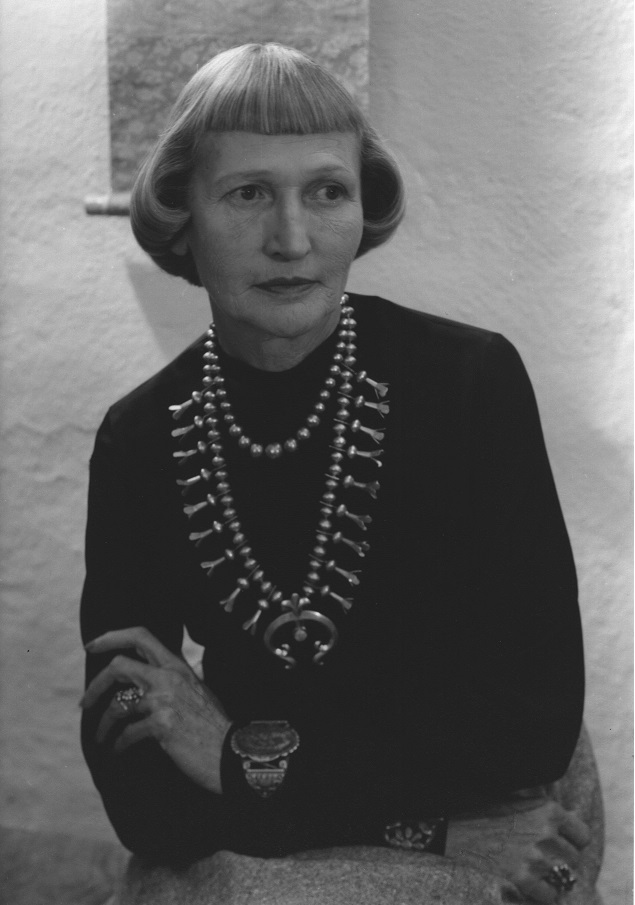
Anna Elizabeth Keener Wilton

An artist and educator, Anna Keener Wilton1 had a dynamic and successful career in both fields. As an artist, she was one of the few female Western American painters of her generation. As an arts educator, she dedicated her career to creating and advancing art programs and curricula in every place she taught, from grade schools to universities in Arizona, Kansas, Texas, and New Mexico. 

Keener Wilton’s arts career commenced in college. Indeed, she would remain a highly ambitious art student for the majority of her profession—she never stopped learning, studying at multiple schools and earning advanced degrees. She got her start with help from artist Birger Sandzén, her teacher at Bethany College. Like her mentor, Keener Wilton made the Western landscape her primary subject. Sandzén propelled Keener Wilton as an emerging artist into the national spotlight by including her work in his highly regarded exhibition programs alongside well-known American and Southwestern artists, including members of the Taos Society of Artists.

While her artistic career was taking off, Keener Wilton also launched her teaching career. Keener Wilton joined the military after college graduation and after one year of service, returned to Bethany as Sandzén’s teaching assistant for the 1919–1920 school year.

In 1920, her professional interests and ambitions led her to the Southwest. She accepted a position supervising the public school’s art program in Globe, AZ. There, she cultivated a lifelong interest in Native arts and cultures, taking weekend excursions in a Model T Ford to explore the nearby San Carlos Apache and Fort Apache reservations, witnessing dances and cultural events, and collecting pottery, weavings, and baskets.

At her parents’ insistence—they were worried about Globe’s remote location—Keener Wilton returned to Kansas in 1921, taking a job as the Kansas City High School art director. She taught there for three years, and, in 1923, her short textbook Spontaneity in Design was published. Keener Wilson also married in 1923 and the next year, the young couple moved to Texas, with Keener Wilton taking a position at the Sul Ross State Teachers College in Alpine. Keener Wilton actively created and exhibited new work through all of these adventures and transitions—she mostly continued painting and also developed a printmaking practice. Her career took a three-year pause in 1926, however, after she gave birth to twin daughters. 

Keener Wilton moved with her family to New Mexico in 1934 and taught at rural elementary schools in the northeast and central parts of the state for four years. In 1938, she divorced and in 1939, Keener Wilton moved to Gallup, NM, where she began teaching in mining camp schools, initiating art appreciation lessons by creating an “art spot” in each classroom showing a full range of arts and crafts. In November of that year, Keener Wilton took eighty-seven grade schoolers on an art outing around Gallup, ending with a visit to artist Lloyd Moylan at the historic McKinley County Courthouse while he was finishing his New Deal mural commission. While in Gallup, Keener Wilton also taught at the Gallup Art Center and at Gallup High School. As she was working on her own mural, Zuni Pottery Makers, in the Courthouse in 1942, the opportunity arose for her to teach at Eastern New Mexico University (ENMU) in Portales. 

Keener Wilton headed ENMU’s art department for more than a decade. During that time, she also pursued her MFA at the University of New Mexico (earned in 1951), focusing her studies on issues of public art education and Pueblo pottery, and a second Master’s degree in art education at the Colorado State Teachers College. 

After her retirement in 1953, Keener Wilton moved to Santa Fe, NM, and continued producing and exhibiting art. She also actively participated in professional and social organizations, holding leadership positions with the New Mexico chapter of the American Association of University Women and the New Mexico Federation of Women’s Clubs. As president of the Santa Fe chapter of the Artists Equity Association, she helped found the New Mexico Arts Commission (established by state statute in 1965) and lobbied President Lyndon Johnson to create a National Council for the Arts.

Toward the end of her life, Keener Wilton received several honors, including the Distinguished Alumna of Bethany College award in 1968 and the Santa Fe chapter of Delta Kappa Gamma’s Woman of the Year award in 1975. In 1970, New Mexico Governor David Cargo purchased one of her paintings (Questa) to hang in the gubernatorial mansion. 

Joseph Roy (J. R.) Willis

Joseph Roy (J. R.) Willis’s life was full of plot twists and plenty of color. It also, contrastingly, had a steady rhythm and followed an orderly pattern. He was a legendary character in Albuquerque, with a recognizable style and eccentric flair, known for wearing capes, twirling canes, and smoking Pall Mall cigarettes.1 At the same time, he was described by contemporaries as the “kind of artist you would like to meet. Not wild-eyed or long haired, more of the Southern Colonel type.”2 His career was, in a sense, similarly paradoxical. Willis was both a self-identified “conservative” fine artist and an enterprising, innovative businessman.

Willis began his career as a political cartoonist for the Atlanta Journal-Constitution during the 1898 Spanish-American War. He also worked as a commercial illustrator for fashion magazines before moving to New York City to attend the Chase Art School (now the Parsons School of Design) in the early 1900s. There, he studied with famous artist Robert Henri and worked for the McGraw-Hill publishing company. His next job was as a “chalk talk” artist on the vaudeville circuit. While working in vaudeville, he met Violet Powell, for whom he would leave his first wife and three children. Willis and Violet had a daughter together and eventually, Willis moved with his new family to California and found work as a set designer and painter in Hollywood. He also became a pioneer of early animation. 

In 1917, on his way to New York City via train, Willis stopped in Laguna, NM, curious about the Hopi Snake Dance. This brief first experience in New Mexico spawned a lifelong interest. That same year, Willis moved to Gallup, NM, and bought a camera store (he was a skilled photographer on top of everything else). He became immediately and deeply involved in Gallup civic life as a Shriner, Chamber of Commerce member, and a charter Kiwanis Club member. He helped start the Gallup Inter-Tribal Indian Ceremonial (an annual event ongoing since 1922), understanding that the event would be good for business and hoping to sell cameras to attendees. 

Indeed, as an artist and entrepreneur, Willis quickly caught on to—and, in turn, helped to spur—the tourist market. By 1923, he was producing his first photo postcards of Gallup events and landmarks for sale in his shop. Over the course of the decade, Willis toured the Grand Canyon, the Four Corners  area, and the greater Southwest making photographs and sketches that he turned into postcards and oil paintings. In 1930, he bragged that he had the “largest line of scenic postcards in the Southwest.”3 

Tragedy struck in May 1931, however, when his daughter died of polio. The artist and his wife moved to Albuquerque shortly thereafter and in 1932 Willis established a studio in Old Town Albuquerque. Still, he kept up the “motoring” habit that had begun after settling in Gallup. For over two decades, he maintained a seasonal regime of heading south for the winter (to Miami, New Orleans, Texas, Mexico, Cuba, the Caribbean, and—at least once—Guatemala), returning every spring or summer to the Grand Canyon to paint from the Art Room at the Bright Angel Lodge,4 and attending the Hopi Snake Dance and Gallup Ceremonial before catching the changing leaves in Taos in the fall . All the while, Willis sketched, made films, and took photographs to supply his postcard and painting business. 

By the end of the 1930s, Willis was a well-known New Mexico artist and his name was synonymous with pictures of “Indian heads” and aspens.5 The artist admitted part of why he was attracted to these subjects was because they were commercially successful. An article describing him as a “Wall Street financier type of man” quoted him as saying “I paint Indians, aspens. They are attractive and sell.”6 Willis’s commercial success was recognized in tandem with his artistic talent. For instance, one review noted that “Mr. Willis has painted in the state for many years and has developed a technique for [typical New Mexico scenes] which has been admired and has found its way into many homes.”7  Cultural critic and influencer Ina Sizer Cassidy aptly classified Willis as a”‘soldier of fortune’ in the arts.”8

While the Great Depression certainly affected Willis—he was hired through the Public Works of Art Project (PWAP) and Works Progress Administration, both need-based programs, to do murals in the mid-1930s—he appears to have been less harmed than many. Willis was truly a savvy entrepreneur who utilized novel (for their time) sales techniques such as layaway and a generous exchange policy. 

Indeed, Willis was a leader within Albuquerque’s art scene. He served as treasurer of the Art League of New Mexico for many years and was involved in the Albuquerque Artists Guild as well. In the fight between modernism and realism that defined the era, Willis was a staunch realist, perhaps for both ideological and commercial reasons. “I have not had time to experiment with the various ‘isms’ jumping from stone to stone but have stuck consistently to my individuality, not copying the fleeting styles coming from abroad,” he said.9 Willis’s beliefs were thrown into relief as he was often compared to his contemporary Brooks Willis, a high-profile modernist who advocated an experimental approach, given their shared surname and because they often exhibited alongside each other. (The two were not related.) For Willis’s part, the associations he most prized and publicized were his professional relationships with artists E. Martin Hennings and Albert Lorey Groll, a member and associate member, respectively, of the exclusive and traditional Taos Society of Artists

Willis also promoted himself and moonlit as an armchair historian, traveling to Mexico to “research” early Spanish exploration,10 presenting lectures accompanied by photographs and motion pictures on topics such as Indigenous arts and culture and Cabeza de Vaca. While not atypical for his time, Willis’s perspective on New Mexico history and Indigenous cultures was predominately stereotypical, as is indicated by his choice to “wear an authentic Indian buckskin coat embroidered with porcupine quills valued at $125 with fine headdress, authentic moccasins, and deer-toe necklace and Umatilla Indian gloves” to the Art League of New Mexico ball in 1938.11 These attitudes make both his status as a “scholar” and his artworks problematic.  

Willis painted, exhibited, and ran his business until his death in 1960.

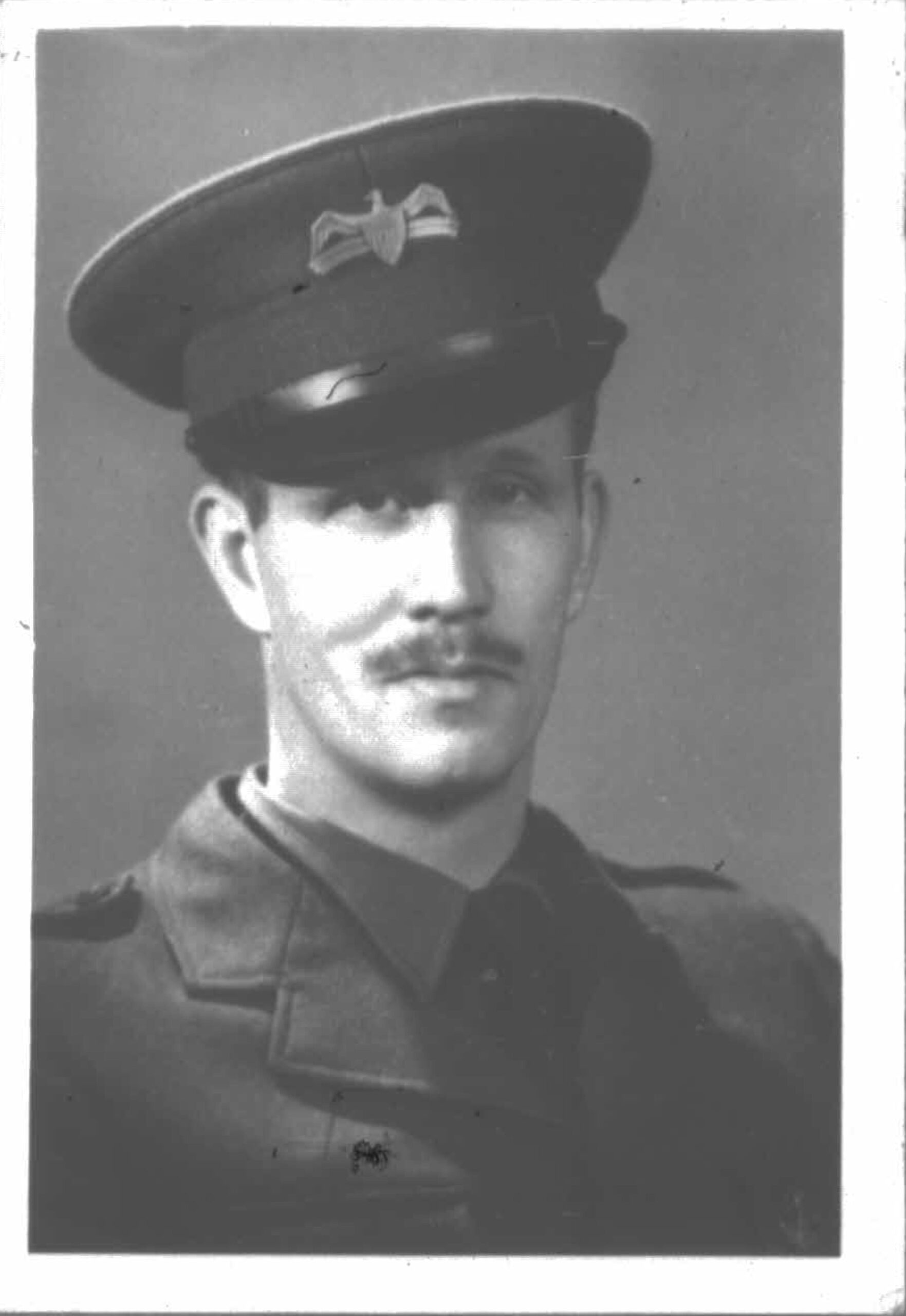
(Paul) Brooks Willis

Brooks Willis was unconventional in art and life. His name appeared as often in the Albuquerque society pages as his art appeared in local galleries and exhibits. He was known as a cutting-edge and outspoken “extreme modernist”1 painter who sketched from airplanes2 and included the occasional outhouse in his imagery.3 He had a reputation as a mover and shaker who both challenged and supported the art world establishment, and as an eligible—if reluctant—bachelor.4 He was also considered a war hero.

Though born in Farmington to a pioneering New Mexico family,5 Willis spent most of his early life and career outside of the state. He attended the Kansas City Art Institute in Kansas City, MO, and the Broadmoor Art Academy in Colorado Springs, CO. By the early 1930s, Willis had established himself in Albuquerque and was gaining recognition as an up-and-coming artist working in the “new style.”6 For two years, he consistently exhibited a variety of works, including lithographs, charcoals, and watercolors, with the same group of artists. By 1933, he was officially involved with the Albuquerque Society of Artists.7 In a move that was equal parts art market and social commentary—and which foreshadows his extensive involvement in federal art programs—he opened a show at Albuquerque’s Franciscan Hotel in November 1933 (at the height of the Great Depression) where he and a fellow artist traded paintings for “food or what have you.”8 

The next five years of Willis’s career revolved around New Deal art projects. In the mid-1930s, he was commissioned by the Public Works of Art Project to paint easel paintings for public exhibition,9 an 8 x 13-foot mural depicting Albuquerque for the historic Bernalillo County Courthouse10 (sold to a private developer in 2020) and paintings for Albuquerque, Clayton, and Las Cruces schools. He was also engaged as a mural painter under the Federal Art Project and completed an eight-part series for Highlands University in Las Vegas, NM, in 1936. Willis was actively involved in the Albuquerque Little Theatre, a federal art project, as a set painter. He continued to promote  Albuquerque’s art scene. He put on a groundbreaking “unsponsored” art show with two of his close colleagues11 and, at the same time, became active in the New Mexico Art League, chairing a discussion on the place of realism and abstraction in art.12

In summer 1939, Willis left Albuquerque to study in Europe. When World War II broke out, he joined a volunteer ambulance corps in France and later spent time in a German prison camp after the Nazi invasion. He was awarded the Croix de Guerre by the French government.

Willis returned home in late 1940 after eighteen months abroad. He immediately married, and in spring 1941 showed watercolors from his time at war. His career evolved as he took a faculty position with the University of New Mexico’s Art Department and then directed  the University’s field school in Taos for two summer terms.

Army service and defense work prompted Willis to move his family to California in 1943, where he also worked for a time in Metro-Goldwyn-Mayer’s art department. Willis spent the next three decades in California before returning to Santa Fe to live out the remainder of his life.

Harold Edward West

Harold (Hal) Edward West was born in Honey Grove, TX, and grew up in Mill Creek and Tishomingo, OK. Despite taking an early interest in drawing, he did not obtain much in the way of a formal art education. He took a few classes, one of which resulted in a prize for “best oil painting” at the county fair, and apprenticed at a commercial art studio in Dallas, TX, during or shortly after high school. He then went to work on the Mississippi River, eventually moving to Santa Fe, NM, in 1926, where he pursued a career in the arts. 

To start, West mostly worked as a commercial artist. Through the first half of the 1930s, he ran a business hand-printing textiles and calendars. He joined the New Deal in 1937 or 1938, mostly producing woodblock prints but also taking up oil painting again. He credits New Mexico’s Federal Art Project Director Russell Vernon Hunter as one of his mentors, and the New Deal as encouraging him to pursue a career in painting. In a 1964 interview, he referred to the New Deal as a “happy little period”: “It was a wonderful thing, and it helped me. I was still making a living . . . I stayed home and painted . . . They financed all the material, canvas and everything—brushes. And I got enthusiastic about painting and stayed with it.”1

While West would continue to take commercial art jobs (for example, designing the front cover for and illustrating Death in the Claimshack by John L. Sinclair), the New Deal brought him recognition within the realm of Western American art. He was given a solo show at the state art museum in 1938 and was selected as one of the artists to represent New Mexico at the 1939 New York World’s Fair, having developed a reputation as a self-taught artist uniquely adept at depicting frontier life—horses, cattle, and cowboys in particular. Echoing the sentiments of many of his contemporaries, Santa Fe New Mexican art critic Ben Krebs wrote of West in 1938 that “much of his life has been spent on ranches and his insight and understanding of ranch life and cowboy behavior is true.”2 Indeed, he lived on a 240-acre homestead south of Santa Fe with his wife and five children.

At the end of the New Deal and during WWII, from 1941 to 1945, West worked as a guard at the Santa Fe Internment Camp, a Japanese prison camp. During that time, he made a number of sketches of his fellow guards, which are now held by the Fray Angelico Library Archives

West returned to painting professionally in 1945. In 1960, he opened a gallery at 601 Canyon Road in Santa Fe, and quickly became a fixture of the famous art district, known for straight talk and playing horseshoes (and poker). He created the “Guide to Canyon Road,” a directory of galleries on the street. West died at the age of sixty-six after a long illness.

Herbert Bolivar Tschudy

Of Swiss ancestry, Herbert Bolivar Tschudy was originally from Ohio but made his career in New York City. After studying at the Art Students League, he became a staff artist at the Brooklyn Museum. In that role, he created murals and backdrops for a variety of ethnology and natural history galleries. His first trip to New Mexico was in 1904 as an expedition artist accompanying the Museum’s first curator of ethnology, Stewart Culin. Tschudy accompanied Culin on numerous trips to the Southwest and Pacific Coast in the early 1900s. 

Tschudy would go on to become the Museum’s curator of paintings and sculpture in 1923. Then, from 1930 to 1934, he served as acting curator of the Department of Natural History. In 1934, he became the Museum’s first curator of Contemporary Art, a position he held until his retirement in 1937. In that role, he organized a “Gallery of Living Artists” and a biennial watercolor series. 

As an independent artist, Tschudy made the Southwest his subject, returning to New Mexico each year for three decades or more. As one 1926 Santa Fe New Mexican report put it, “Mr. Tschudy tramps around the southwest year after year in search of subjects for his watercolors and he has caught the spirit of the desert.”1 Tschudy typically made Gallup his vacation headquarters “to enable him to study and paint Indian life.”2

Jose Rey Toledo

Jose Rey Toledo was of Jemez, Zia, Pecos, and Hopi heritage. His interest in art was encouraged from a young age. In school, he made pencil and crayon drawings along with paper arts and crafts. He also grew up sketching hunting scenes in charcoal with his uncle on the kitchen walls while waiting for breakfast. When he was eleven years old, a missionary interested in “documenting” Jemez daily life asked Toledo to make drawings on a chalkboard. “I started by sketching heads of animals, anything I could think ofhorses, cats, bighorn sheep,” the artist recalled. “Those were just impromptu chalk drawings . . . She was very surprised that we could have a semblance of some realism in our drawings.”1 

From 1930 to 1935, Toledo attended the Albuquerque Indian School. He took his first formal art classes starting in tenth grade, and remembers being “discouraged by teachers” from including a background in his paintings. As he explained, he was taught that “Pueblo Indian painting was characterized by just a blank surrounding the image . . . that was the Indian style.”2 He designed the diploma for his high school graduation, after which he enrolled in the College of Fine Arts at the University of New Mexico. Short on tuition funds, Toledo dropped out after only two weeks, however.3 

Toledo’s professional art career ramped up in the early 1940s, as he went to work on the Federal Art Project. By the end of the decade, he was receiving national recognition and ribbons for his work, including at the Gallup Inter-Tribal Indian Ceremonial (which used one of his paintings for its 1941 poster4). In 1947, he was awarded first prize for Indian painting from the Philbrook Museum of Art for his painting Dancing Spirits. “I wanted to do something that was specifically of Pueblo nature. And the thing that came to my mind was a painting of the Zuni Shalako dancing and their spiritual guardians,” he said. “And that was the largest painting I was going to attempt on watercolor paper . . . so I painted that and sent it off.”5 

Eventually, Toledo returned to school and received a Bachelor of Fine Arts degree from the University of New Mexico in 1951. He went on to receive a Master’s in art education in 1955.  

The knowledge, lifeways, beliefs, and, in particular, ritual dances of his people were the focus of his work. For Toledo’s 1994 obituary, Zuni scholar and former Museum of Indian Arts and Culture curator of ethnography, Edmund J. Ladd, commented that “he was a very astute observer. He painted everything from memory. He recorded a lot of elements and cultural materials that are preserved only in his paintings. His works are a source of preservation for the Pueblos.”6

Over the course of his life, Toledo gave back to his community and Native peoples in many ways. He taught art at the Albuquerque and Santa Fe Indian Schools for the first half of the 1950s. In 1956, he applied to become a health education specialist through the Indian Health Service. He served assignments in North Dakota, South Dakota, and Laguna Pueblo, NM, through the early 1970s, at which point he went back to school for his third degree, a Master of Public Health from University of California, Berkeley. Toledo continued to work for the Indian Health Service in Albuquerque until his retirement in 1976. 

In addition to being an artist, art educator, and health worker, Toledo was also a highly respected culture bearer, storyteller, community leader, and civil rights activist. From the 1960s to the 1980s he participated in civil rights demonstrations in Gallup and Albuquerque and gave numerous talks on cultural and historical topics. In the 1970s, Toledo also enjoyed yet another career as an actor, appearing in films and television including Flap (1970), The Man and the City (which aired on ABC from 19711972), The Trackers (1971), and a popular pizza commercial.

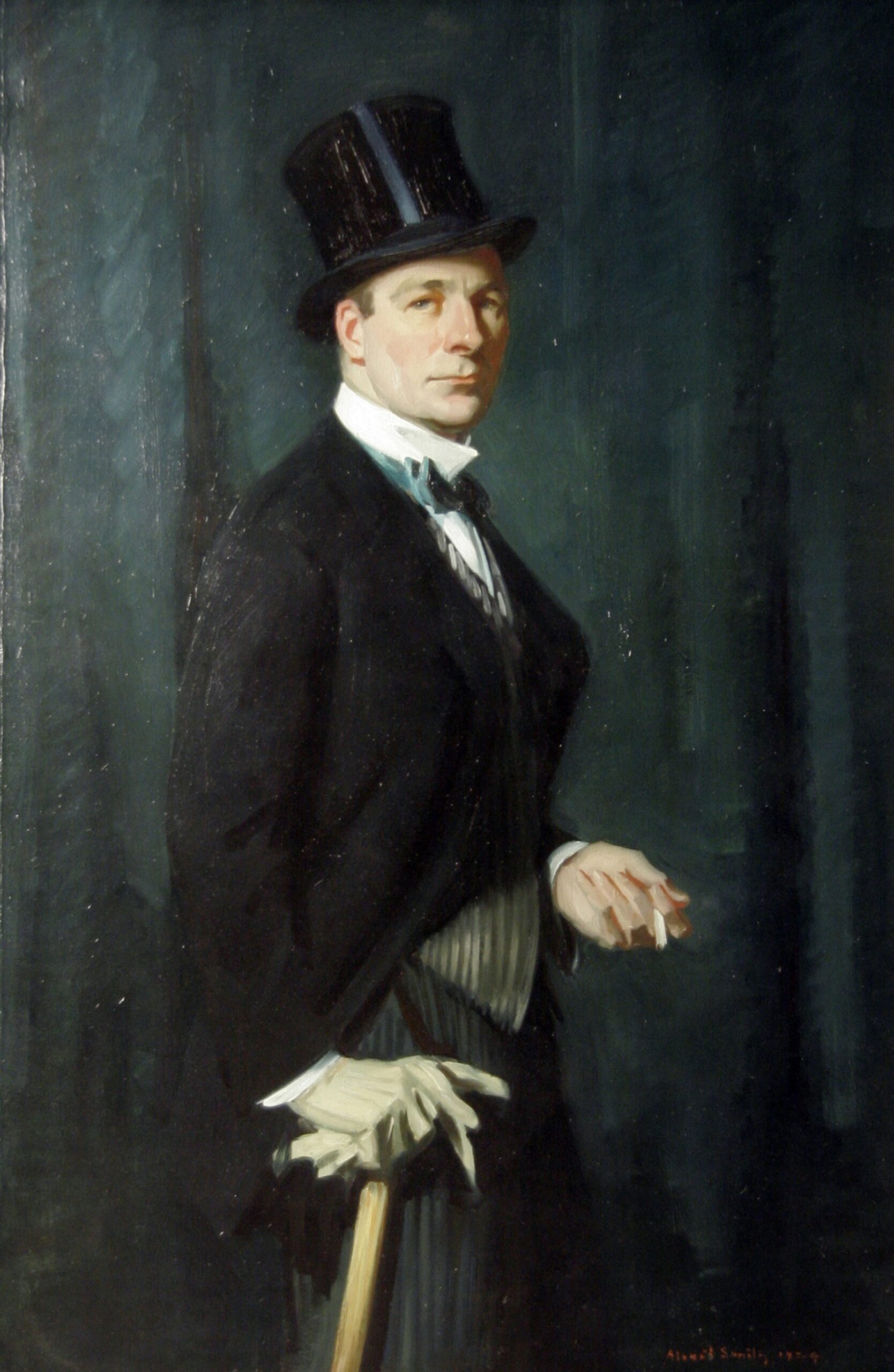
Albert Delmont Smith

Smith is best known as a portraitist who spent most of his career in New York City, where he also painted the occasional cityscape and seascape. A reported member of the Salmagundi Art Club in Greenwich Village, he painted many capital-S Society portraits, including one of President Dwight D. Eisenhower for the Union Club of the City of New York. He also painted a portrait of fellow artist and Salmagundi Club member Childe Hassam, now in the collection of the Toledo Museum of Art. He was the director of the Heckscher Museum of Art in Huntington, NY.

Louis Bassi Siegriest

Louis Siegriest is best known as a landscape painter. He experimented with different forms of abstraction and with mixed media over the course of his career, which began at the age of 15 when he entered the California College of Arts and Crafts. After two years, he transferred to the California School of Fine Arts. Around the same time, about 1917, Siegriest joined a group of avant-garde Bay area artists called “The Society of Six” who painted in bright and bold colors. The Six, as they were called, exhibited together throughout the 1920s before disbanding. At the same time, Siegriest established a career as a commercial painter and printmaker. His style shifted towards a more realistic approach and somber palette in the 1930s during the Great Depression when, he said, “everybody was painting low key.”1 He was also employed as a printmaker by New Deal art programs. During World War II, Siegriest joined the U.S. Army Corps of Engineers and created camouflage designs for buildings. After the War, he spent some time in Nevada, where he made mostly drawings. 

His return to the California art scene in 1952 caused a stir—two days before its scheduled opening, Siegriest cancelled his e Young Museum exhibit after it pulled his painting titled Miner Going to Church after a prominent socialite wrote to the San Francisco Board of Commissioners objecting to the work as “pornographic” and “sacrilegious.”2 Siegriest describes his work that came after as “semi-abstract”: “the more I did, the more I got into it. But I always had a subject matter in the thing…And the way I would do it was to put a lot of the gypsum with dry color on the [canvas] and take a spatula and move it around. Then I’d look at it and I’d see certain things in there that suggested a desert or whatever it was. And so I’d work to that end, to keep that image in there.”3 Over time, Siegriest’s paintings became increasingly sculptural, as moved from gypsum into materials like asphalt.

Siegriest lived his entire life in the Oakland mansion in which he was raised. Towards the end of his life, he had to give up painting due to his deteriorating eyesight.

What are you looking for?

Art Collection

Gallup’s New Deal art collection consists of over 120 objects created, purchased, or donated from 1933 to 1942 through New Deal federal art programs administered by President Franklin D. Roosevelt to support artists during the Great Depression.

Main Menu

Image Use Notice: Images of Gallup’s New Deal artworks are available to be used for educational purposes only. Non-collection images are subject to specific restrictions and identified by a © icon. Hover over the icon for copyright info. Read more