Eliseo Rodriguez

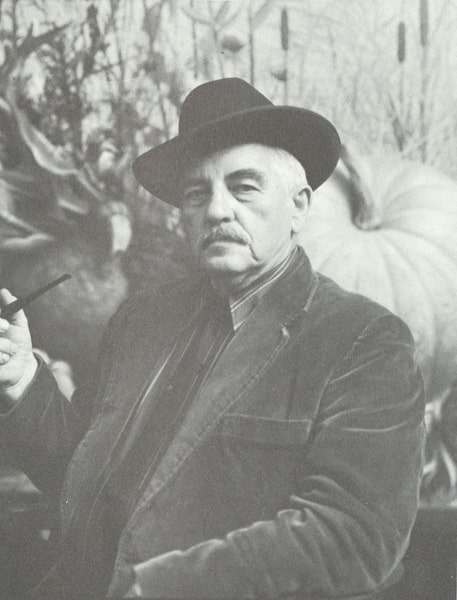
Eliseo Rodriguez grew up near the now-famous artistic enclave of Canyon Road in Santa Fe, NM. As a teenager, he delivered firewood and did odd jobs for Canyon Road residents—scholars, artists, writers, and patrons who made up the town’s “Anglo intelligentsia.”1 It was there he first met Józef Bakoś and other members of “Los Cinco Pintores.” 

At the age of fifteen, Rodriguez was granted a two-year scholarship to the Santa Fe Art School, where he was admitted as the “only Spanish.”2 There, his teachers included Bakoś. 

In 1935, Rodriguez married his wife, Paula. They built a house and lived the rest of their life close to where Rodriguez was born. 

Rodriguez was hired by the Federal Art Project (FAP) in 1936: “When I took my craft work, paintings on glass, carvings and tinwork, in for sale . . . the store manager told me she couldn’t buy any more items, but maybe I should go meet Russell Vernon Hunter [State Director of the Federal Art Project for New Mexico],” Rodriguez recalled in a 2003 interview. Hunter instructed him to apply for relief at the county courthouse to prove eligibility for the FAP. “[After being approved] I went back to Mr. Hunter. He gave me all kinds of materials to work with, canvas, paint, watercolors, everything. I was excited and felt like I was in business.”3

Rodriguez contributed to the FAP in a variety of ways—he was, in his words, “always willing to do anything I was asked to do. I was willing to be versatile.”4 Over the course of his employment with the FAP, Rodriguez helped Paul Lantz complete a mural for the Texas Centennial. He also helped friend, neighbor, and colleague Louie Ewing apply the silkscreen printmaking technique to create a portfolio of Navajo rug designs for the Laboratory of Anthropology (founded in 1927 by John D. Rockefeller to study the Southwest’s Indigenous cultures; the Laboratory is now part of the Museum of Indian Arts and Culture). Additionally, he hand-colored prints for the Portfolio of Spanish Colonial Design. Rodriquez also painted in reverse on glass and created oil-on-canvas paintings for the FAP. 

“[I made] $75 a month. We were paid by the month and since we didn’t have a family yet that took care of our grocery needs for a month. You turned in your work once or twice a week or once or twice a month depending on how fast you worked.”5 

Rodriguez was one of the few highly regarded Hispano artists working for the FAP. “There weren’t a whole lot of Spanish people working in the Project . . . We weren’t just assistants. Although in some cases, we were considered helpers.”6 The Museum of New Mexico Art Gallery (now the New Mexico Museum of Art) first exhibited his work in 1936, and by 1938, “his paintings also hung alongside works by his teachers and other recognized Anglo artists, including . . . Sheldon Parsons.”7

E. Boyd, who supervised the creation of the Portfolio of Spanish Colonial Design for the FAP (and who later became a curator of Spanish Colonial art at the Museum of New Mexico Art Gallery and then the Santa Fe Museum of International Folk Art), introduced Rodriguez to the straw appliqué technique. “She said that this form of straw art originated in Africa, was picked up by the Moors in Spain and brought by the Spanish to New Mexico,” said the artist. “It was tacky, messy, and tedious work . . . I was willing to try anything so I tried doing the straw inlay appliqué work and enjoyed doing it and wanted to keep it going as a form of art that was dying out.”8

By the 1950s, Eliseo and Paula Rodriguez were the last remaining practitioners of straw appliqué in New Mexico. In the 1970s, with encouragement from a conservator at the Museum of International Folk Art, they began exhibiting their work. Today, Eliseo and Paula are credited with saving and renewing the art form, which is once again thriving in New Mexico. In 2004, the National Endowment for the Arts made both artists National Heritage Fellows

While Rodriguez is most famous as a straw appliqué artist, he was multitalented, working in a variety of media such as oil on glass, oil on canvas, watercolor, lithography, ceramics, wood, and cabinetry. Rodriguez credits the FAP with his success: “It did more for me than if I had gone to college. It gave me so many possibilities.”9
Edgar Alwin Payne

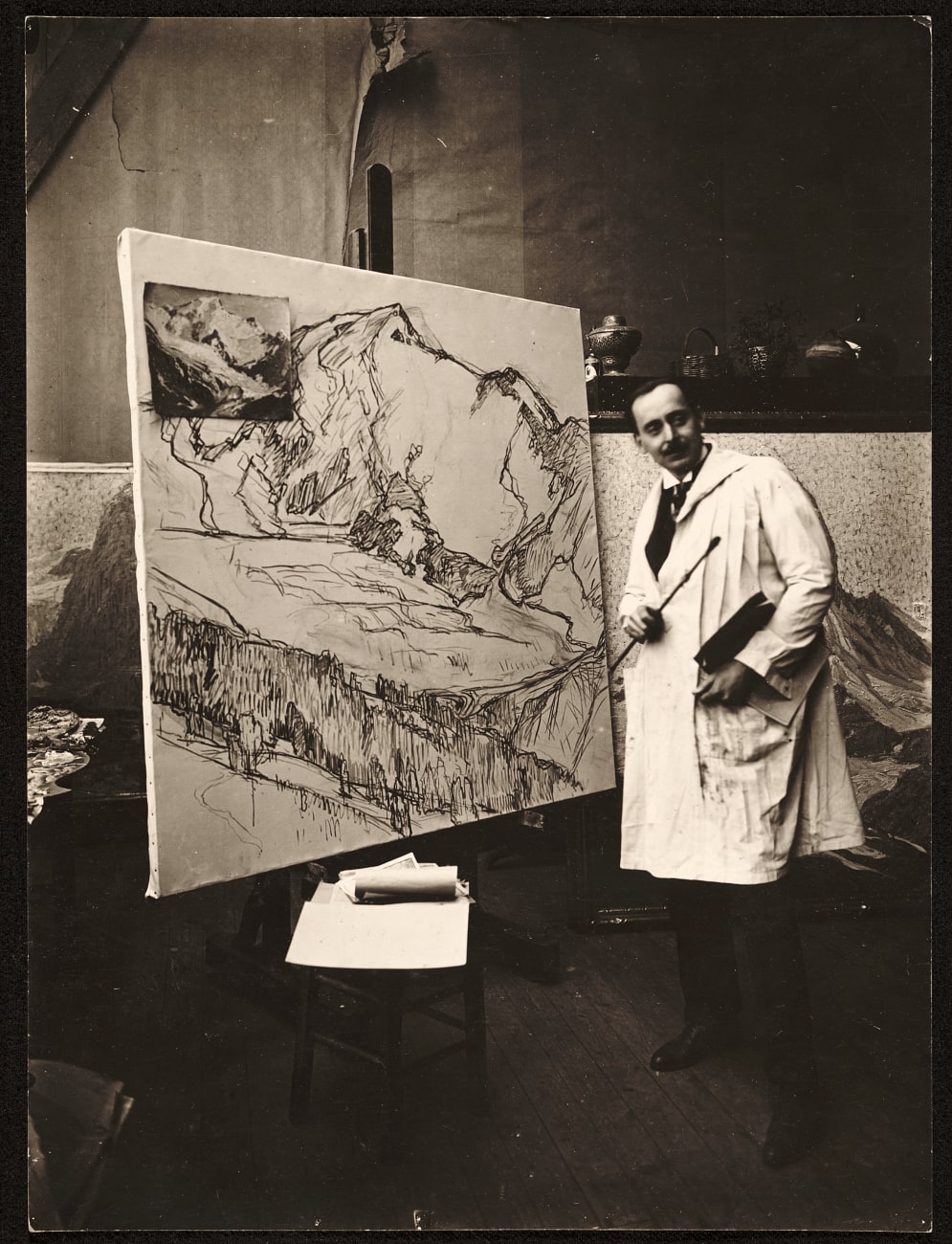
Unlike most of his contemporaries in the Gallup New Deal Art collection, Edgar Alwin Payne was largely self-taught. He left home at the age of fourteen and worked as a sign painter, house painter, scenic painter, muralist, and portraitist in the South, Midwest, and Mexico. In 1907, he enrolled at the Art Institute of Chicago but left after only two weeks. In 1909, he made his first visit to California, where he met his future wife, Elsie Palmer, a fellow commercial artist. They married in 1912 and worked in California and Chicago, becoming well-established muralists and members of both art scenes. In Chicago, Payne exhibited at the Art Institute and the Palette & Chisel Club. He also helped organize, and became the first president of, the Laguna Beach Art Association in 1918. 

Payne is best known for his Western landscapes, and, as a plein air (outdoor) painter, he spent his career making painting excursions to California, Arizona, Utah, New Mexico, and Canada. A trip to the Sierra Nevadas in 1916 made a lasting impression, and Payne returned to paint the majestic mountain range many times. Another pivotal moment in his career was a commission from the Santa Fe Railroad in 1917 to record the journey from Albuquerque to California. The Railroad frequently engaged artists to produce material for its advertising campaigns. For this commission, Payne spent four months exploring Canyon de Chelly, and the paintings he produced solidified his reputation as a landscape artist and his ties to the Southwest. According to Gallup Independent newspaper archives, Payne regularly summered in Gallup for the next three decades, making sightseeing trips in the surrounding area and often attending, and serving as a judge for, the Gallup Inter-Tribal Indian Ceremonial art exhibit. 

Payne’s career reached a new level of success in the 1920s. During that decade, he twice made two-year tours of Europe, and he moved to New York City, where his artwork was selling well, while continuing to travel the Southwest. When the Great Depression took its toll, he resettled in Los Angeles in 1932, where he would spend the remainder of his life. In 1941, he published an influential book, Composition of Outdoor Painting.

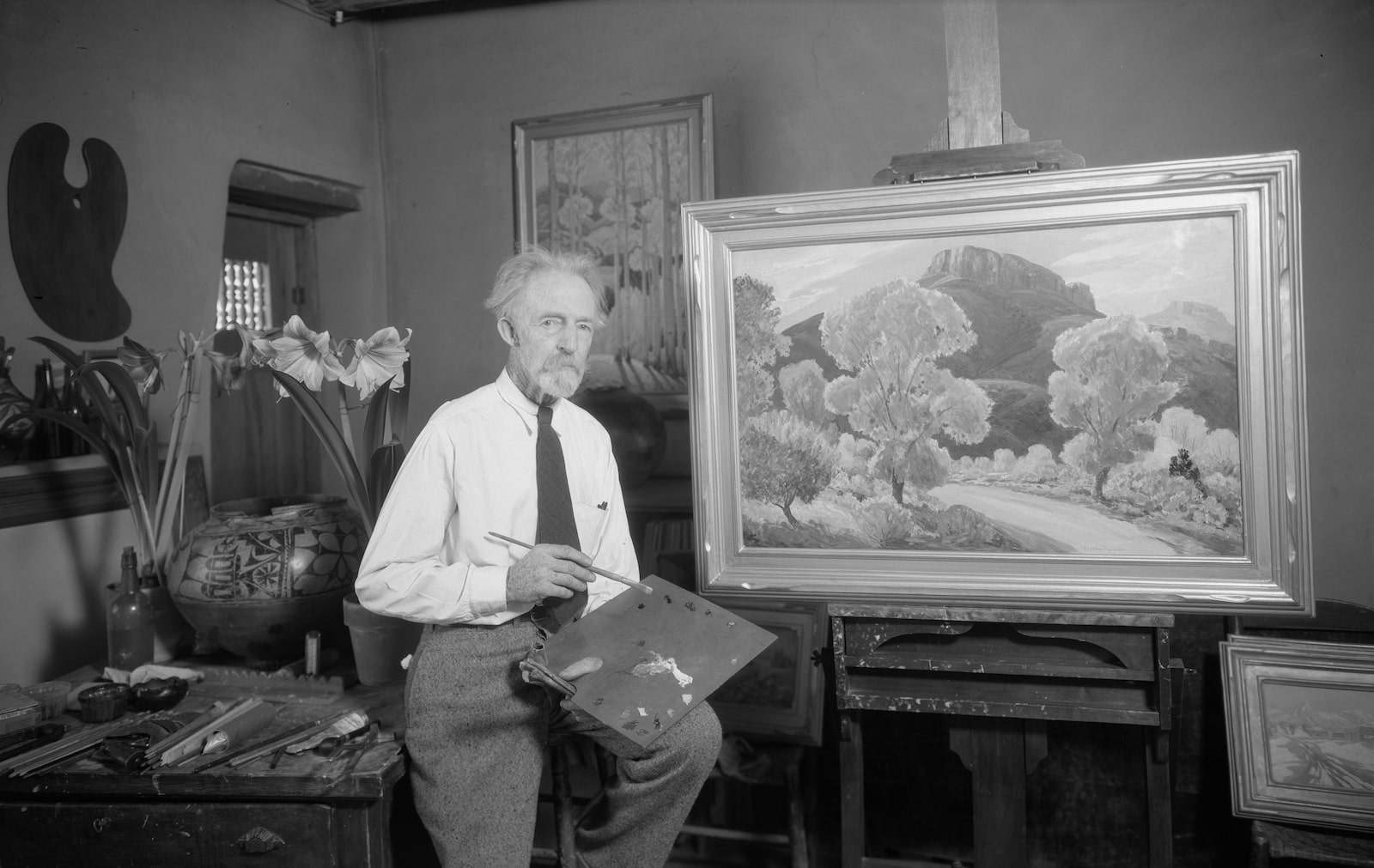
Sheldon Parsons

It is largely by serendipity that Sheldon Parsons became a painter of the New Mexico landscape. A student of noted artist William Merritt Chase at the National Academy of Design, Parsons was enjoying a career as a successful New York City portraitist in the early 1900s. President William McKinley and Susan B. Anthony were two of the famous Americans whose likenesses he painted. However, his career and life trajectory abruptly changed upon the death of his wife in 1913. Parsons sold everything and headed west with his twelve-year-old daughter to complete a mural commission in San Francisco. Parsons suffered a relapse of tuberculosis in Denver, and, on the advice of doctors, the duo changed course to head south to the curative climate of New Mexico. 

Parsons settled in Santa Fe and, absorbed by the color and light of his new surroundings, began to paint landscapes saturated with the blue, red, and golden hues of the Southwest. He immediately made an impression in the budding artists’ colony, and his paintings quickly became “one of the chief attractions at the state museum in Santa Fe [the Museum of New Mexico].”1 At the same time, Parsons continued to show in New York City as a member of the prestigious Salmagundi Club, and his work was also exhibited across the country from Chicago to Oklahoma to Washington, DC. In 1914 and 1916, Parsons completed commissions from the Santa Fe Railroad for two paintings of the Grand Canyon. Within a year of its 1917 opening, the Museum of New Mexico Art Gallery (now the New Mexico Museum of Art) arranged a “permanent Parsons gallery . . . which [was] hung with 22 of his most representative canvases.”2 

Parsons was a key figure in consolidating the efforts and cementing reputations of the Taos and Santa Fe art colonies. From the time he moved to Santa Fe, Parsons supported the Museum of New Mexico. In 1915, he organized an exhibition of Taos artists that was described thusly: “never before in its history has the southwest seen so great or so typically an American art exhibit.”3 By 1920, Parsons was appointed “curator of art exhibits” for the museum’s Art Gallery, a post he held for two years. 

As curator, he engaged in the burgeoning debate over the new modernist movement. Parsons himself tended toward a more realist approach in his work. Though he was denied membership in 1923 to the academically inclined Taos Society of Artists, he remained informally affiliated with the group, spending a lot of time painting in Taos—and his daughter married Taos Society artist Victor Higgins in 1919. Yet Parsons remained open-minded. Contemporary critics noted changes in his approach—a move toward bold colors and “freedom . . . in handling”4—as he exhibited frequently in Santa Fe in the teens. After assuming the position of art museum curator, Parsons defended modernism, writing that “this movement in modern art is too great, too universal a movement, for there not to be some grain of truth at its heart and doubt begets humility and humility begets wisdom.”5 He then rearranged the Southwestern art exhibit at the museum, provoking praise from some and criticism from others. Parsons dismissed his critics as “illiterates applauding with their mouths”6 in a letter to the editor of the Santa Fe New Mexican. Yet the political overtones of the debate—several modernist artists were staunch leftists, and the artistic community generally tended toward a “bohemian” outlook at odds with Santa Fe’s conservative political leadership—ultimately cost Parsons his job. He was fired to appease tensions between the museum and civic leaders.  

Another notable achievement of Parsons’s as curator was to arrange a “loan art exhibit” of one hundred works from private collections in Santa Fe, the first of its kind. Parsons also helped to organize the Santa Fe Arts Club in 1921, which some scholars mark as the official beginning of the Santa Fe art colony.7 

Over the next decade, Parsons continued to evolve, increasingly edging on modernism. Yet by the mid-1930s, as “radical” movements such as Transcendentalism gained a foothold and younger artists took charge of the Santa Fe art colony, Parsons’s work began to look “conservative, with Parsons himself being relegated to the ‘old guard.’”8  In 1938, one critic referred to him as the “dean of New Mexico landscape painters.”9 Though Parsons died in 1943, his work continued to be a staple of the Santa Fe art scene and museum exhibits.

The artist pictured in his studio. Photograph made between 1925 and 1945 by T. Harmon Parkhurst.
T. Harmon Parkhurst. Sheldon Parsons, 1935?. Courtesy of the Palace of the Governors Photo Archives (NMHM/DCA), 073941.

Virginia Nye

Virginia Nye was born in New York City but grew up in Kansas City, MO. In the 1930s, after contracting tuberculosis, she moved to Albuquerque. It was during this time that she worked for the Federal Art Project, as a supervisor for Bernalillo County and as a copyist on the Portfolio of Spanish Colonial Design. Nye also appeared in many Albuquerque Little Theatre Company productions (the Little Theater was a project of the Federal Art Project). There, she met actor Clifford “Tip” Dinkle, whom she married in 1937.

Helmuth Naumer, Sr.

Born and raised in Germany in the heart of the Black Forest, Helmuth Naumer, Sr. dreamed of the American West he knew from “cowboy and Indian” novels by German author Karl May. In 1925, at the age of eighteen, he left for New York. As a naturalized citizen, he spent the next year traveling across America, stopping briefly in Santa Fe, NM before reaching Los Angeles, CA in 1926. Low on funds but still consumed by wanderlust, he joined the Merchant Marine and served at sea for six years. In 1932, he moved to Santa Fe, the town that in his view epitomized the “Old West.” Naumer said he “wanted to make a record of this country before it was overrun, still wild and beautiful because once that’s gone, we can never get it back.” Naumer built a home and studio on San Sebastian Ranch and raised horses. 

Naumer quickly became known for his pastels on black paper. “Pastels are particularly suited for painting Western landscapes,” Naumer said. “Their soft tones match those of the distant mountain ranges and accentuate the delicate shades of our sunsets.”1

Between 1935 and 1936, Naumer was commissioned by the National Parks Service, through the Works Progress Administration, to create artwork for the newly built visitor center at Bandelier National Monument. Naumer said he was paid $45 per month2 to create fourteen pastel scenes depicting views of the Monument and nearby Pueblo villages (still on display at the Monument’s visitor center). For these paintings, the artist spent time living at Kewa (Santo Domingo) Pueblo.3 In 2016, the US Postal Service used Naumer’s painting Administration Building, Frijoles Canyon on a “Forever” stamp as part of a sixteen-piece set commemorating the National Parks Service’s centennial. 

Of his experience as an artist in New Mexico during the New Deal, Naumer said: “It was difficult being an artist here, especially during the Depression when nobody had any money. To get along you had to trade pictures for necessities. I traded for furniture, for cars, for horses and goats.”4

Naumer continued as a prolific pastelist, though he also worked in oils and watercolors over the course of his career. In the late 1930s, he was traveling 1,500 miles each month across the state to paint en plein air (outdoors). “I can’t explain it, but paintings made at the scene sell better than those made in a studio of some imagined landscape,” he said. “Perhaps it’s some detail or shading at the actual scene that would be omitted from a studio painting.”5 He won prizes at the New Mexico State Fair each year he exhibited between 1939 and 1955, and his contemporaries excitedly noted that magazine magnate Henry Luce was one of his collectors. 

In 1938, a newspaper columnist asked Naumer about Hitler’s rise to power. According to the writer, “Naumer’s merry grey eyes instantly became serious and he said: ‘It will probably be two or three years from now—perhaps sooner—but someday things are going to pop wide open in Europe and it will be the worst war this hectic world has ever experienced.’”6 Naumer went on to serve as a staff artist in the Army during WWII. After returning home, Naumer continued to paint and exhibit, and his work became increasingly abstract. 

Describing his career in a 1959 pamphlet, he said that “though born in Europe and having lived in many places in the world, coming to the Southwest was like coming home. Here I found peace and beauty and these I try to paint.”7

Lloyd Moylan

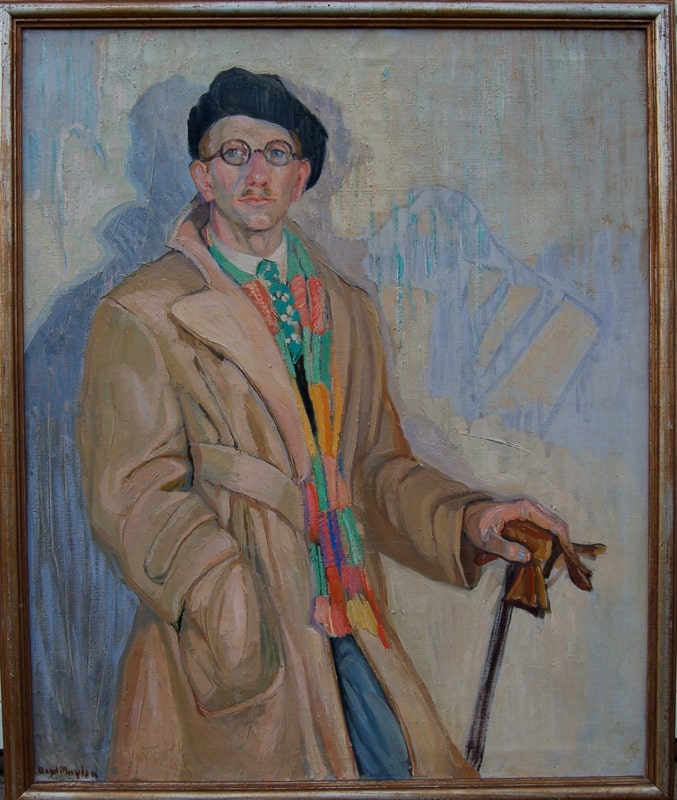
Lloyd Moylan was a very productive New Deal artist. Indeed, he is the best-represented artist in Gallup’s New Deal art collection, which holds nineteen of his easel paintings and prints and one of his largest mural commissions (2,000 square feet)

Moylan first trained in his hometown at the Minneapolis Art Institute before continuing his studies at The Art Students League in New York City. A teaching position at the Broadmoor Art Academy brought him west to Colorado Springs, CO, in 1920. Moylan’s interest in mural painting developed during this time as the result of several trips to Mexico—the Mexican mural movement began in the early 1920s. 

Moylan completed several private mural commissions in Colorado Springs, including for the Antlers Hotel, which involved research travel to Taos, NM. Those visits inspired his move to New Mexico in 1934, where he set up a studio in Alcalde along with D. Paul Jones, who studied at the Broadmoor. In New Mexico, Moylan continued creating murals on a commission basis, for the Ute Theatre (since demolished) for example, but mainly now through the state’s Federal Art Project (FAP). The New Mexico FAP  hired Moylan for large-scale murals at Eastern New Mexico University in Portales and Highlands University in Las Vegas (see “Additional Federal Art Projects” section below) in addition to McKinley County’s historic courthouse in Gallup. As a result of his participation in the New Deal, Moylan became a big believer in the value of public art and murals in particular. In an essay for the Federal Art Project, he wrote that public art “will bring to the surface much that is growth-provoking in the spirit of humanity.”1 

At the conclusion of the New Deal, Mary C. Wheelwright hired Moylan as the first administrator/curator of the Museum of Navajo Ceremonial Art, which she founded in 1937 in Santa Fe (and which is now known as the Wheelwright Museum of the American Indian).

Moylan served in that capacity for twelve years, during which time he gained broad recognition as a painter, building on his reputation as a muralist. Moylan was well known by contemporaries as a premier watercolorist, “cherished modernist,”2 and “specialist in Navajo subject matter.”3 He was a popular and frequent gallery and museum exhibitor, with a following of “Moylan enthusiasts.”4 He was an art judge for the State Fair in 1943, and his work was included in defining exhibitions of the era, including the Museum of New Mexico’s Styles in New Mexico Art traveling exhibition in 1946 as well as its 1955 traveling exhibition Santa Fe Art 1917–1955.

Wheelwright dismissed Moylan from his post in 1954, after which his career diminished. Moylan spent the last decade of his life between California and New Mexico.

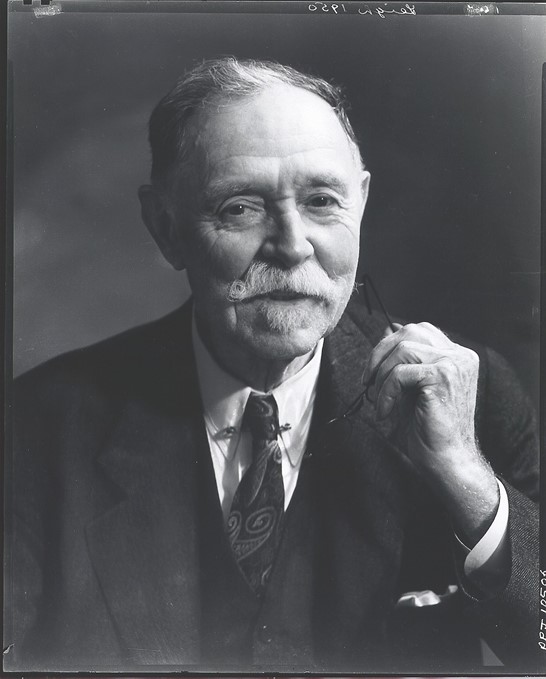
William Robinson Leigh

William Robinson Leigh’s long and impressive career is woven together by the twin threads of adventure and storytelling. Leigh decided on a career in art early. He enrolled in classes at the Maryland Institute (the country’s second oldest art school) at the age of fourteen and studied there for three years before leaving for the Royal Academy in Munich, where he spent over a decade. 

Upon his return to the United States from Germany in 1895, Leigh lived and worked in New York City, where he made a reputation as a book and magazine illustrator, creating images of everything from metropolitan to Martian life. Leigh’s sense of adventure also played out in an immersive cyclorama painting 115 yards in circumference and 15 yards in height.1 In 1906, he seized the opportunity of a trip west offered by the Santa Fe Railroad in exchange for a painting of the Grand Canyon. Leigh completed this commission and five other paintings, and the rest, as they say, is history. He would go on to become one of the country’s most famous Western American painters, earning numerous accolades by the end of his career.   

Leigh once offered this bit of advice to budding artists: “What you paint is more important than how you paint.”3 He lived by his words. For fifty years, Leigh traveled dozens of  times between New York and Arizona, New Mexico, and the mountain West, making hundreds of paintings of the landscape and people. Images of Native Americans feature prominently in his oeuvre—he painted Navajo and Hopi people every summer between 1912 and 1926.

It is also true that Leigh’s paintings captured the nation’s attention for their style in addition to their subject matter. By the 1950s, he had been dubbed “America’s Sagebrush Rembrandt,” admired for his detailed draftsmanship, use of color, and attention to the changing Southwest light. 

His apparent wanderlust and skill also twice took him to Africa on expeditions in 1926 and 1928 with the American Museum of Natural History, for which he painted animals and exhibit backgrounds. Over the course of his career, Leigh wrote and illustrated several books on his travels, including Frontiers of Enchantment: An Artist’s Adventures in Africa and The Western Pony.

Paul Valentine Lantz

Paul Lantz’s art career was fast and furious, at least for the first part. He enrolled at the Kansas City Art Institute at the age of fifteen,1 reportedly the youngest student ever enrolled. Two years later, Lantz moved to New York City and worked as a dishwasher to fund his studies at the Art Students League. One version of the story is that after four years, the stock market crash prompted him to board a freight train to Santa Fe. Another version, recorded in Town & Country magazine, is that he hopped a boxcar to the Southwest after he “too enthusiastically” witnessed a Communist meeting in Union Square.2 In any event, he made his way to New Mexico, his connection to the state being that of Taos Society of Artists member Randall Davey, who had been his teacher in Kansas City. Davey would continue to mentor Lantz and help to facilitate his career for the next decade. 

Lantz lived and painted in Santa Fe and Albuquerque from 1930 to 1939, and in that time left a lasting mark. Lantz’s career operated on two parallel tracks. His living was mostly made as a commercial artist, creating murals and embellishing furniture for La Fonda Hotel, fulfilling portrait commissions, restoring church frescoes, and painting the “Toyland” set for the town of Madrid’s famous Christmas display. At the same time, he pursued his career as a “fine” artist. In 1933, he helped found the Rio Grande Painters, a modernist artist society that successfully organized shows across the state for several years. 

During the New Deal, Lantz was first employed by the Public Works of Art Project as an easel painter. He made landscapes and scenes of Cabeza de Vaca’s exploits to hang in government buildings. Lantz was later employed by the Federal Art Project and in this capacity painted a mural for the Clovis Post Office between 1937 and 1938. Though he made a research trip to Clovis to prepare for the project, the subject matter of which was the history of Clovis, Lantz’s mural was criticized by locals for its lack of accuracy. “Old timers [attacked] it . . .  saying that some of the buildings are in the wrong places and that a water trough, a conspicuous object on the street in the early days, has been omitted entirely from the picture. Others have attacked the appearance of a horse in the mural,” saying that it looked like it only had  three legs. The Clovis News-Journal pointed out that “the animal’s position indicates that the [horse] is single-footing—something a cowboy would not tolerate.”3 Despite such thorough scrutiny, in 1939 Lantz’s art was chosen to represent New Mexico at both the New York World’s Fair and the Golden Gate International Exposition in San Francisco. 

In 1940, to fund a trip to New York City for a show of his work in a Park Avenue gallery, Lantz incorporated himself and sold fifty shares for $10 each in “Paul Lantz Inc.”4 It is unclear if this enterprising move paid off. From New York, Lantz sent a painting back to Santa Fe to be sold at the Museum of New Mexico Art Gallery for $500, with the proceeds going to his shareholders as “dividends.”  Lantz’s business ventures ultimately led to his divorce, and in a 1942 court filing, his wife declared the couple “broke.”5

The second half of Lantz’s career involved travel and mostly commercial artistic production. Lantz served as an artist in the Army during World War II and moved to California afterward. He then spent a decade on a farm in upstate New York and a few years in Mexico City. During this time, he worked as a book illustrator, illustrating more than twenty-five books including the 1942 Newberry Medal winner The Matchlock Gun by Walter D. Edmonds and Little Navajo Bluebird by Ann Nolan Clark. Once he decided to start painting “seriously” again, it was only a few years before he returned to Santa Fe permanently in 1973.

In a 1976 Southwestern Art article, Lantz’s contemporary John Jellico characterized him as a “Modern Old Master,” noting the color, dynamism and “fine pattern of movement” within his work.6

Gene Kloss (Alice Geneva Glasier Kloss)

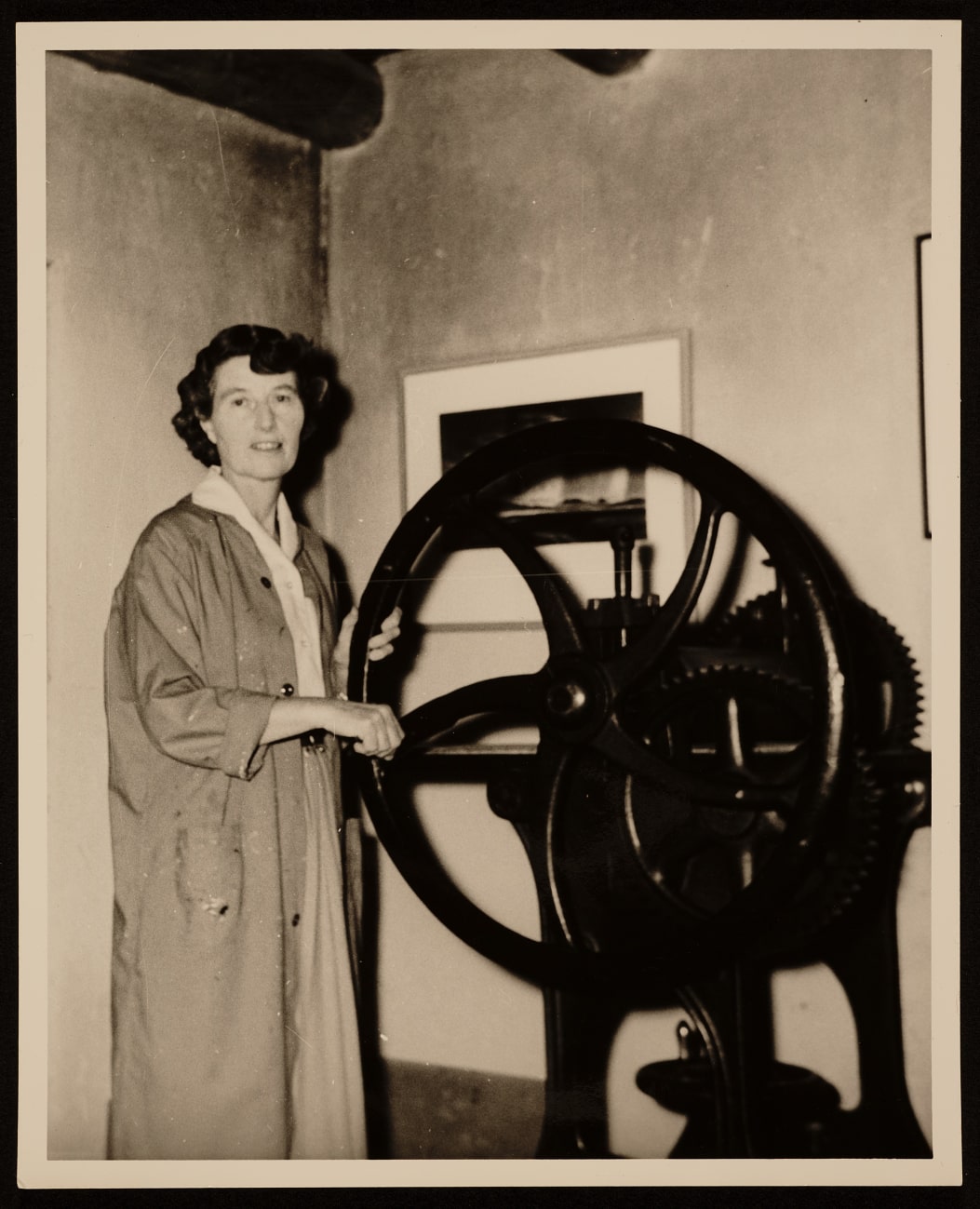
Born Alice Geneva Glasier, Gene Kloss was already a highly respected California printmaker when she made her first trip to Taos, NM, for her honeymoon with her husband, musician and poet Phillips Kloss, in 1925. She brought her etching press on that trip and made prints from their campsite in Taos Canyon. “We bought a sack of concrete and set it up on a stump in the woods and I printed my plates there,” she explained. Kloss would later claim that she was “a New Mexican from then on.”1 She would spend the next twenty years traveling between California and New Mexico before settling permanently in Taos. 

The New Deal allowed Kloss to continue to succeed as an artist. “[The New Deal] was a very pronounced help to me in my career because the government subsidy alone gave it dignity and importance,” she said in a 1964 interview, continuing, “and their . . . attitudes towards the artist in their free expression and pulling the most out of one to do your best technically, and the amount, and the result of speeding you on your way in your creative work.”2

First, for the Public Works of Art Project, Kloss created a print series of nine New Mexico scenes that were reproduced and distributed to public schools across the state. She was then employed by the Federal Art Project to create etchings, oils, and watercolors. “They went to galleries, museums. Lots of them went to Washington for the offices,” Kloss recalled. Kloss won the Eyre gold medal at the 1936 exhibition of the Pennsylvania Academy of the Fine Arts, and in the two decades following the New Deal, her work was collected by many of the country’s major museums. Her paintings explored the landscapes, cultures, and people of New Mexico, and she appreciated the New Deal’s emphasis on regionalism. “I think it [the New Deal] stimulated an interest in art. Because people in outlying places who had never seen anything had murals in their post office and received some of the easel pictures or prints to hang in their schools and their public buildings. I think it is one thing that started the public interest in art.”3

D. Paul Jones

Not much is known about D. Paul Jones, who appears to have been an introverted artist. While his murals and paintings have survived in New Deal art collections across New Mexico, from Raton to Clayton to Santa Fe to Socorro, the artist’s life, it seems, was lived mostly off the record. Kathy Flynn, self-titled “lead detective” for New Deal art in New Mexico, paints Jones as a restless outsider, perhaps traumatized by military service in France during World War I, writing, “After the war, he took himself to Phoenix and worked in a bank but needed more solitude, nature and art, so he bought some art supplies and food and went into the wild of the Hopi and Navajo country. He learned all about these people, their country and customs and was given [a] Navajo name [meaning Little Dog] because of his gift for imitating animal sounds.”1 

Jones reportedly went on to study at the Broadmoor Art Academy in Colorado Springs, where he met Lloyd Moylan, eventually moving with Moylan in the early 1930s to Alcade, NM, where they shared a studio.

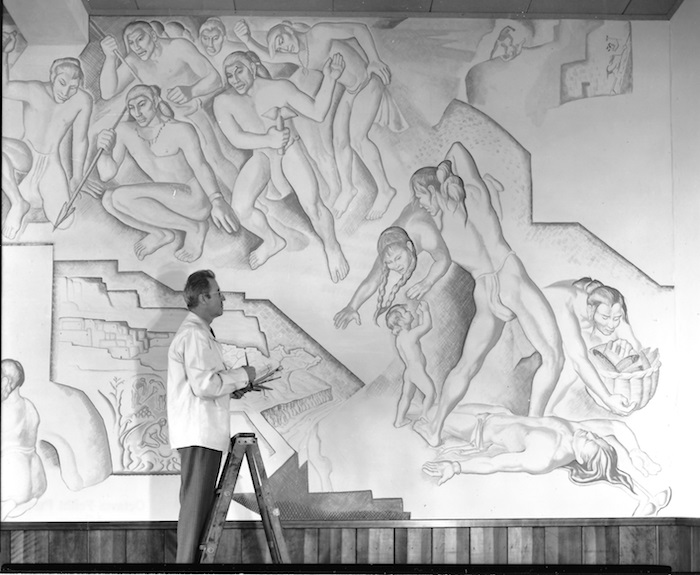
Available records indicate that the New Deal was the most active time in Jones’s career. His formal introduction to the Santa Fe art scene appears to have been through an exhibition of Federal Art Project (FAP) artists at the Museum of New Mexico,2 followed shortly thereafter by a revealing of his FAP mural, Founding of San Juan, The First Capitol of New Spain completed for the Spanish-American Normal School in El Rito, NM (now a campus of  Northern New Mexico College). Contemporary reviews of Jones’s art were typically mixed. One reviewer of Founding of San Juan admired his landscapes while casting doubt on his figure-drawing abilities.3 Santa Fe artist and art critic Alfred Morang described Jones as tending toward a “gloomy color scale,” yet utilizing contrast effectively.4

Perhaps his failure to gain any real traction under the New Deal is why his career seemingly stalled at its conclusion. Jones continued to operate locally, so to speak, as a beloved Española Valley artist for the remainder of his life.

What are you looking for?

Art Collection

Gallup’s New Deal art collection consists of over 120 objects created, purchased, or donated from 1933 to 1942 through New Deal federal art programs administered by President Franklin D. Roosevelt to support artists during the Great Depression.

Main Menu

Image Use Notice: Images of Gallup’s New Deal artworks are available to be used for educational purposes only. Non-collection images are subject to specific restrictions and identified by a © icon. Hover over the icon for copyright info. Read more