Uncredited Hispano Artist(s),

likely Elidio Gonzales

Console Table

About 1930s

Pine

32” W x 27” H x 14¾” D

About this artwork

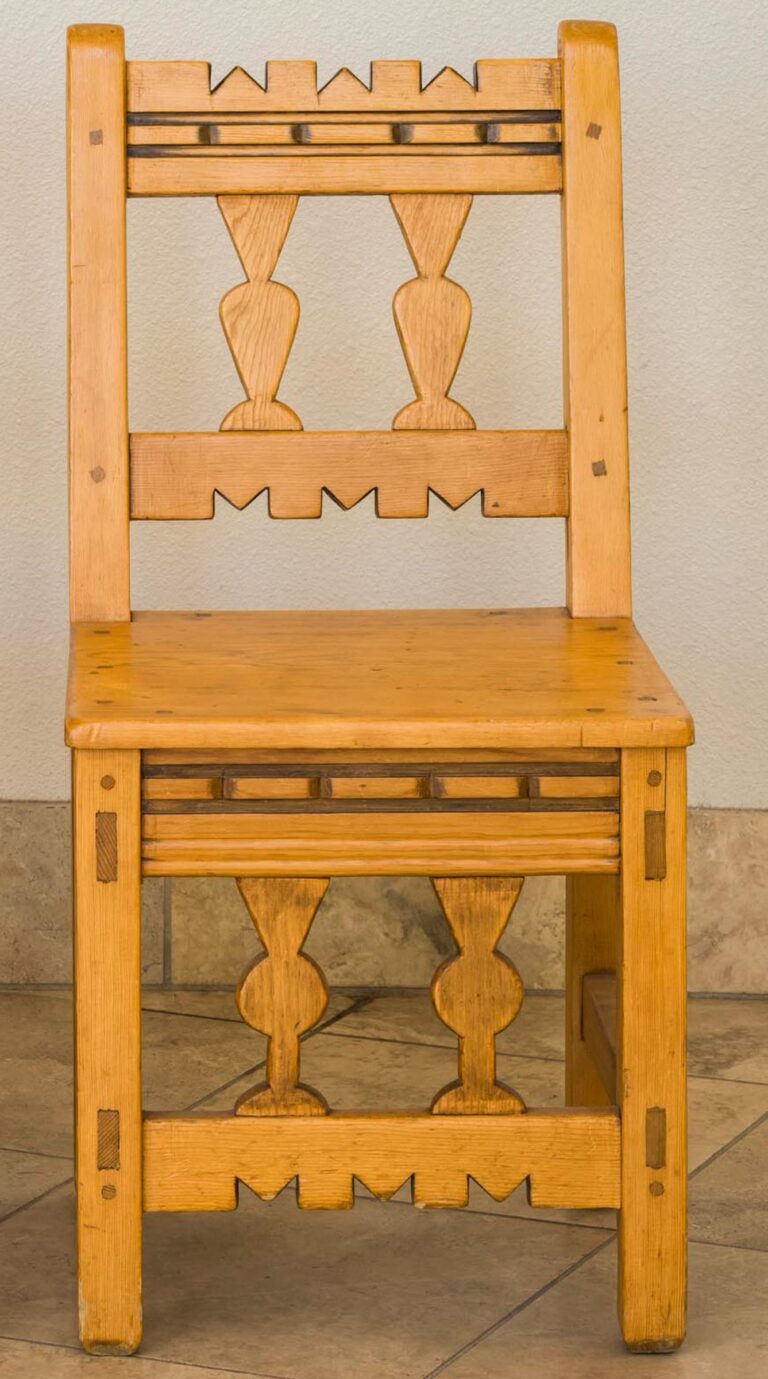
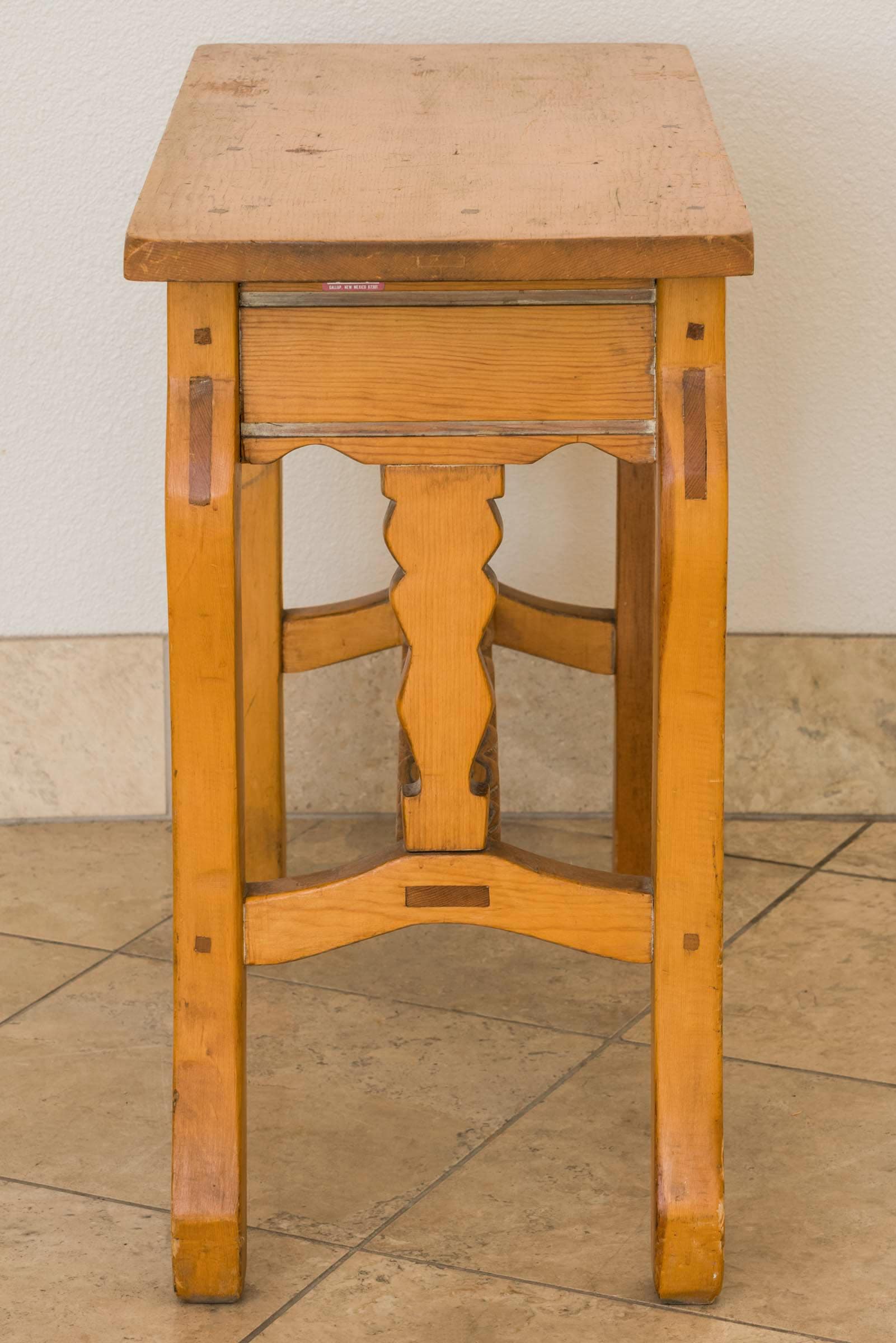
In terms of its decorative arts projects, New Mexico’s New Deal and associated art programs were specifically interested in styles of Spanish Colonial design unique to what is now New Mexico (what were the northern provinces of New Spain in the 18th century). What is referred to as a “Nuevomexicano” aesthetic developed mostly in response to geography. While hardwoods were accessible in what is now Central America, soft pine was what was readily available in what is now the Southwestern United States. That led artists to simplify originally ornate patterns that would not turn out as well in soft wood. Here, for example, the slight S-curve of the table legs is an understated version of a more elaborate style (the technical term for which is “cabriole”). Another simplified element is the basic wavy edge of the table skirt (located under the drawer).
Audio description

This console table is crafted from smooth pinewood, with a warm golden honey color. The table measures approximately two and a half feet wide, two feet tall, and one foot deep.

We view the table straight on and slightly from above so that the top and front but not the sides are visible. The top of the table is flat and extends about two inches beyond the body of the table. The width of the table’s top matches the width of its feet, giving the piece a solid square structure.

The table has four legs, each with a slight S-shaped curve which gradually extends downward before ending with a slight bulging curve at the bottom.

Just below the tabletop, in the center of the front of the table, is a small rectangular drawer. The drawer’s front features the fluidly carved flower design in the shape of a half-circle. At the center of the flower where the petals meet, is a small, round wooden knob that serves as the drawer’s handle. Surrounding the flower, the drawer is framed by a carved rectangle with a wavy border.

Halfway down the table, a narrow bar or decorative shelf extends from one pair of legs to the other. The bar is shaped and carved like a braid, as if two ribbons are crisscrossing back and forth to form eight almond shapes.

The table’s structural components are securely connected using visible wooden mortise and tenon joints, which are expertly crafted to hold the pieces together without the need for nails. This attention to detail highlights the craftsmanship and durability of the piece. The combination of flowing curves, square shapes, and fine carvings gives the table a balanced, elegant appearance.

For more about the style and history of this piece, read the “About this Artwork” section above.

See this artwork in a different light

More artworks by this artist

We are always open to learning more about our collections and updating THIS website. Does this ENTRY contain inaccurate information or language that you feel we COULD improve or change? Click here to let us know.

Copyright © 2026 gallupARTS

What are you looking for?

Art Collection

Gallup’s New Deal art collection consists of over 120 objects created, purchased, or donated from 1933 to 1942 through New Deal federal art programs administered by President Franklin D. Roosevelt to support artists during the Great Depression.

Main Menu

Image Use Notice: Images of Gallup’s New Deal artworks are available to be used for educational purposes only. Non-collection images are subject to specific restrictions and identified by a © icon. Hover over the icon for copyright info. Read more