

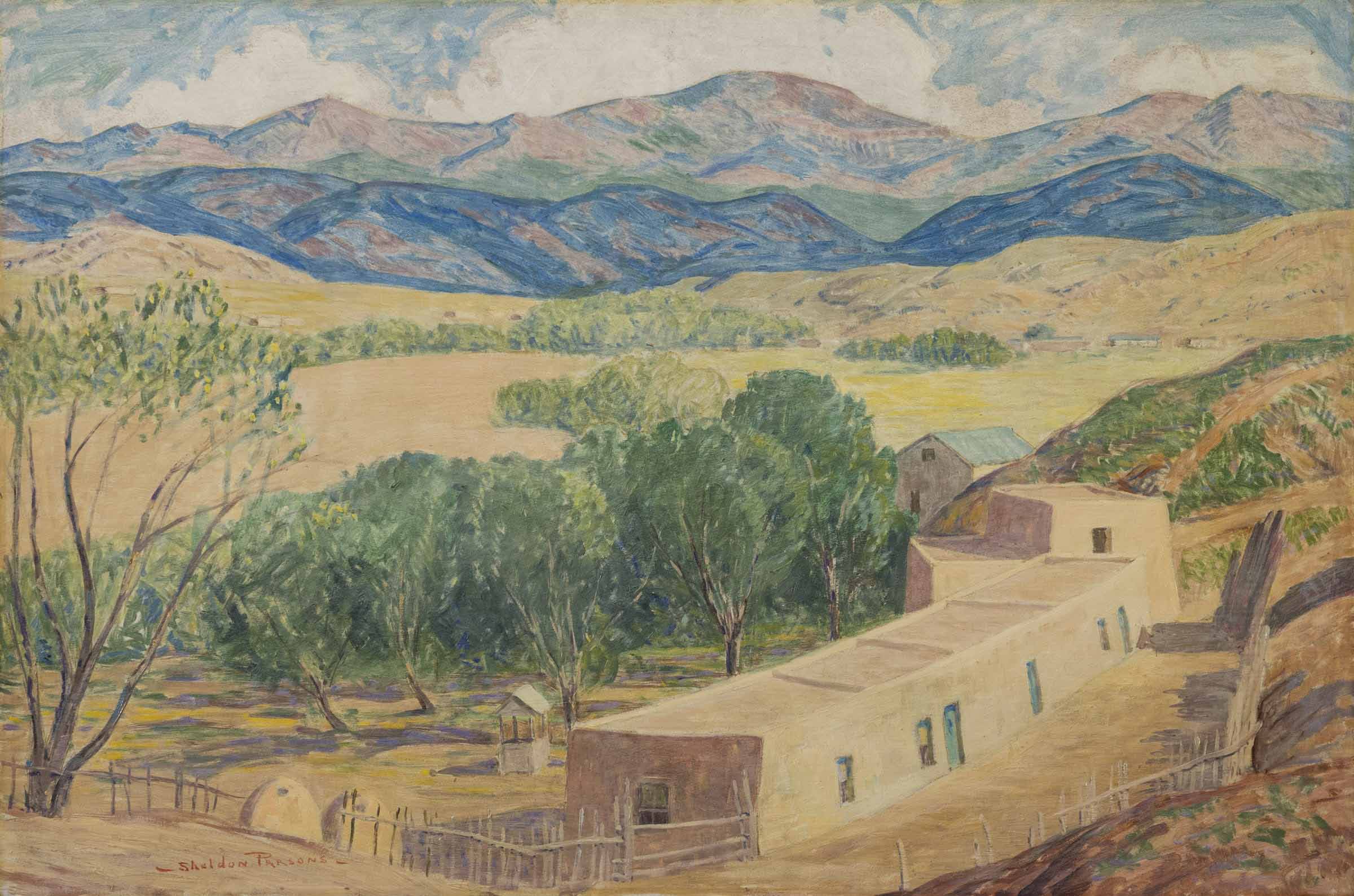
Sheldon Parsons’ career spanned the first half of the 20th century, when one avant-garde art movement after another rose to defy convention and challenge the foundations of Western American art. As an artist and curator, Parsons bridged the professional divide between “realism” and “modernism”—he both promoted traditional standards while being open to new approaches. His more “realistic” side is at play in Nambe Valley, Summer. The painting adheres to the major conventions of Western art: it is composed according to a clearly defined foreground, middle ground, and background; it takes a panoramic perspective on the landscape; its color palette is tightly controlled; and its brushwork delivers a high degree of finish.
New Deal Contribution: Exhibiting Artists
Casa on the Hill
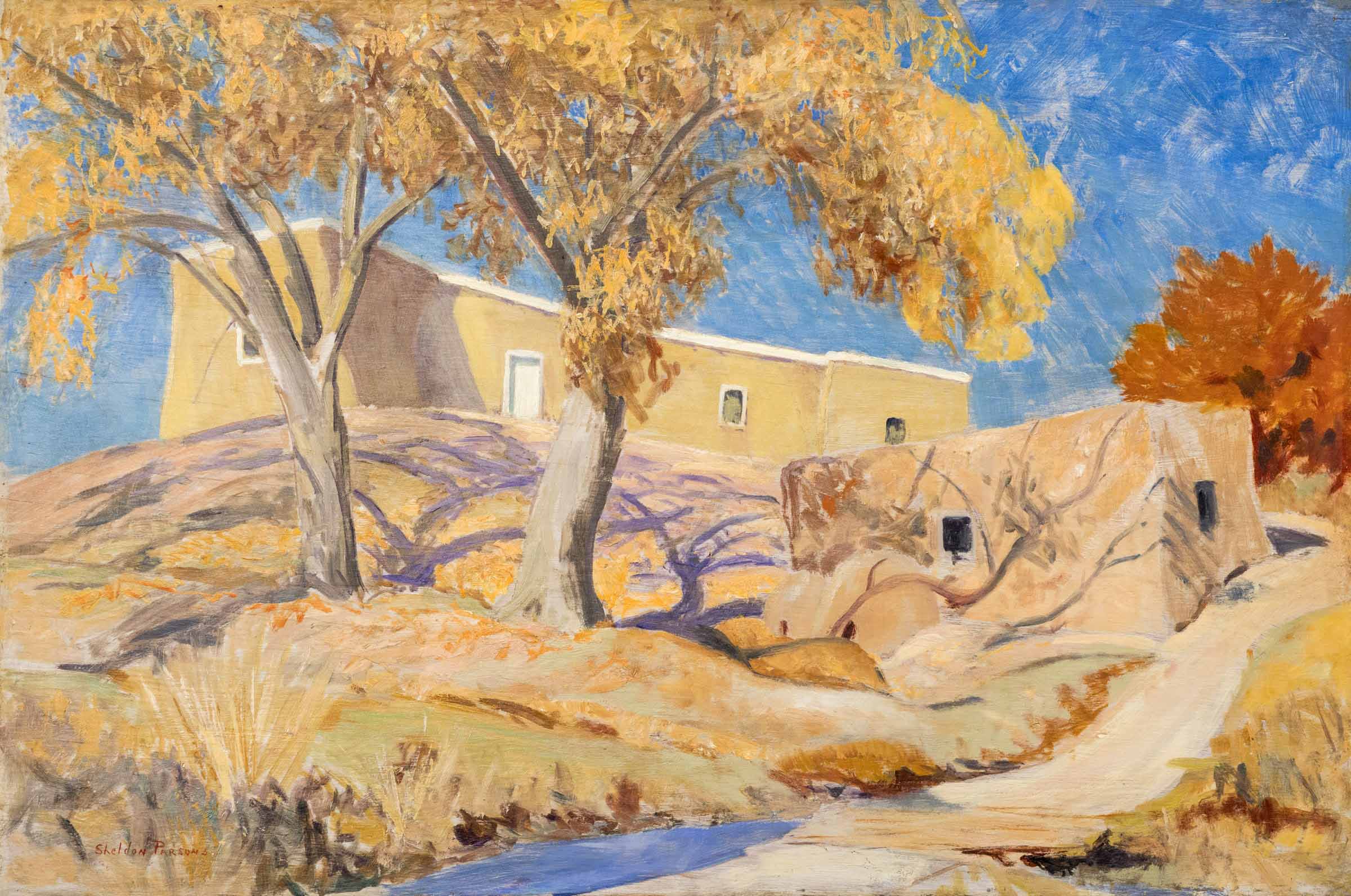
Sheldon Parsons, a leader within the growing Santa Fe artist colony at the beginning of the 20th century, took both sides in the era’s hotly contested artistic debate between “realism” and “modernism” in Western American art, promoting traditional standards without dismissing unconventional ideas. As his career matured, however, Parsons became increasingly experimental in his practice, and bold use of complementary colors became a trademark of the artist’s in his last decade (Parsons died in 1943). In Casa on the Hill, a mix of warm yellow and orange autumn hues stand out against a loosely brushed bright blue sky. Note how the purple shadows cast by towering trees in a latticework pattern on a green-glazed ground make the painting a dance of color.
Untitled (Navajo Girl with Lamb)
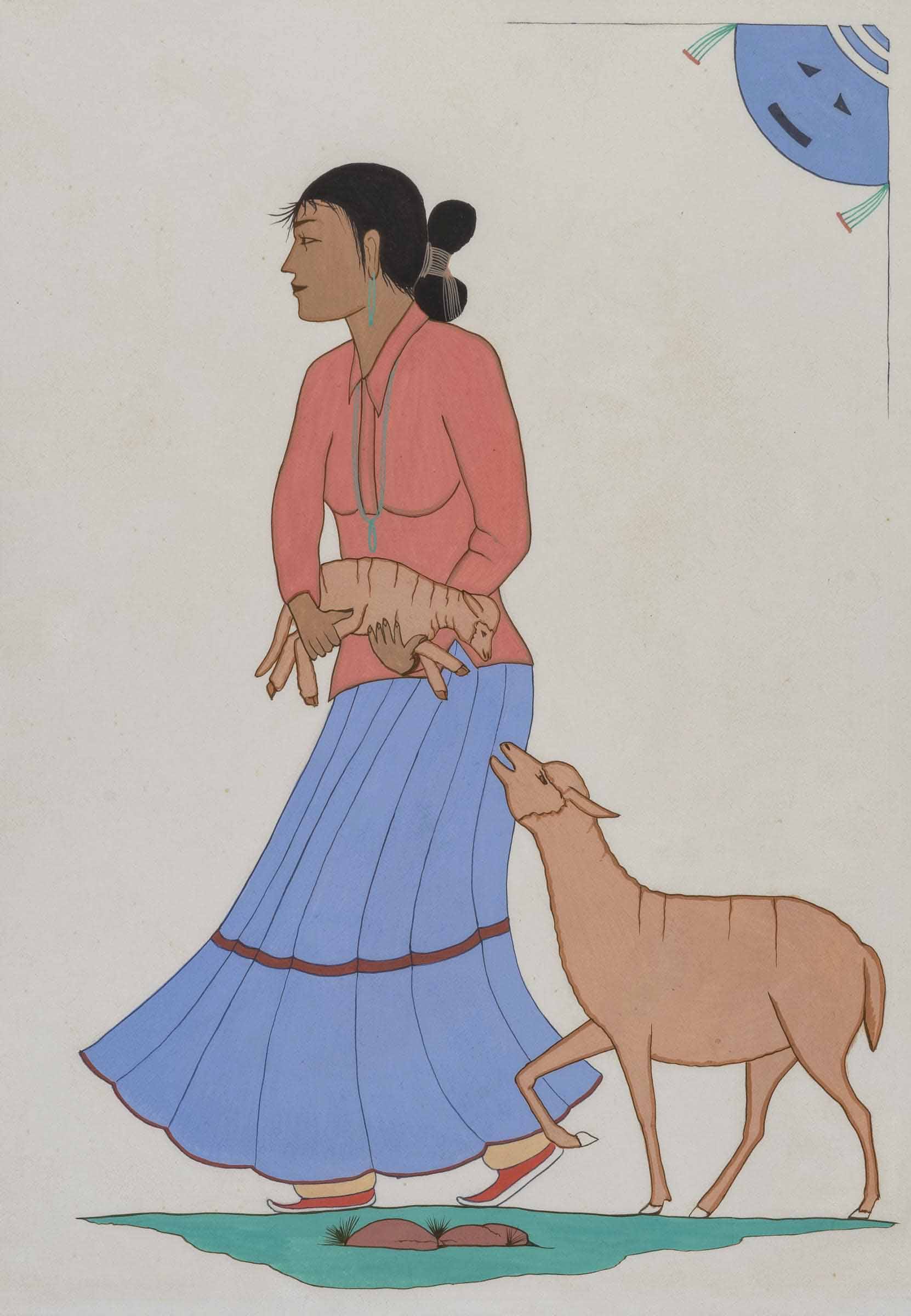
Untitled (Navajo Girl with Lamb) reveals how the flat aesthetic of the 1930s Studio Style, which dictated Native American painting for the first half of the 20th century and beyond, curtailed artists’ ability to communicate meaning. As told in the Studio Style, Timothy Begay’s (Diné/Navajo) story of the sacred and spiritual relationship between his people and their sheep is reduced to a pleasing, decorative scene.
Untitled (Yei Bei Chei)
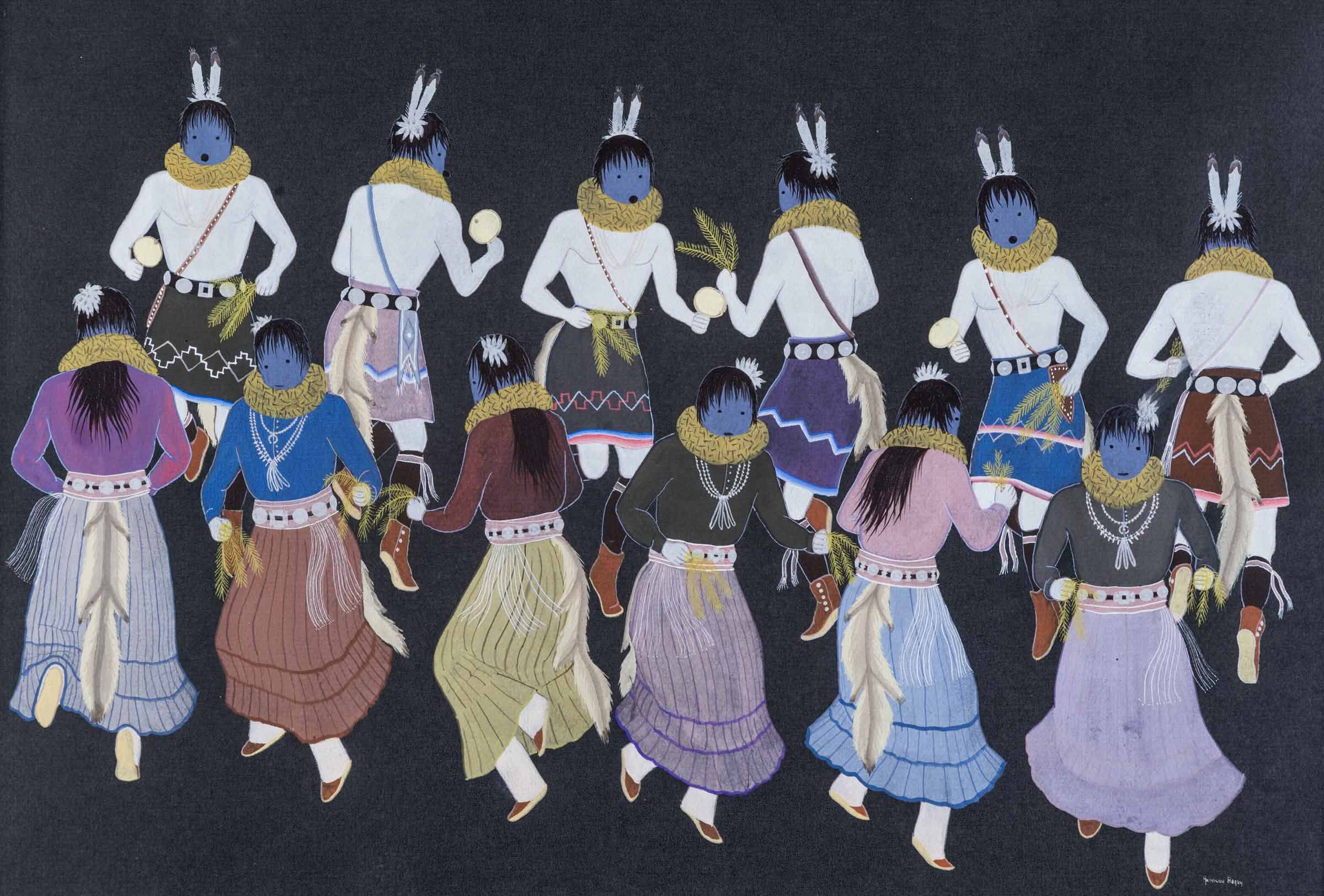
In Untitled (Yei Bi Chei), Harrison Begay (Diné/Navajo) breaks through the restrictive conventions of the “flat” Studio Style in which he—along with most Native painters of his generation—was trained in the 1930s, achieving a sense of movement, rhythm, and energy.
Untitled (Taking Down a Finished Rug)
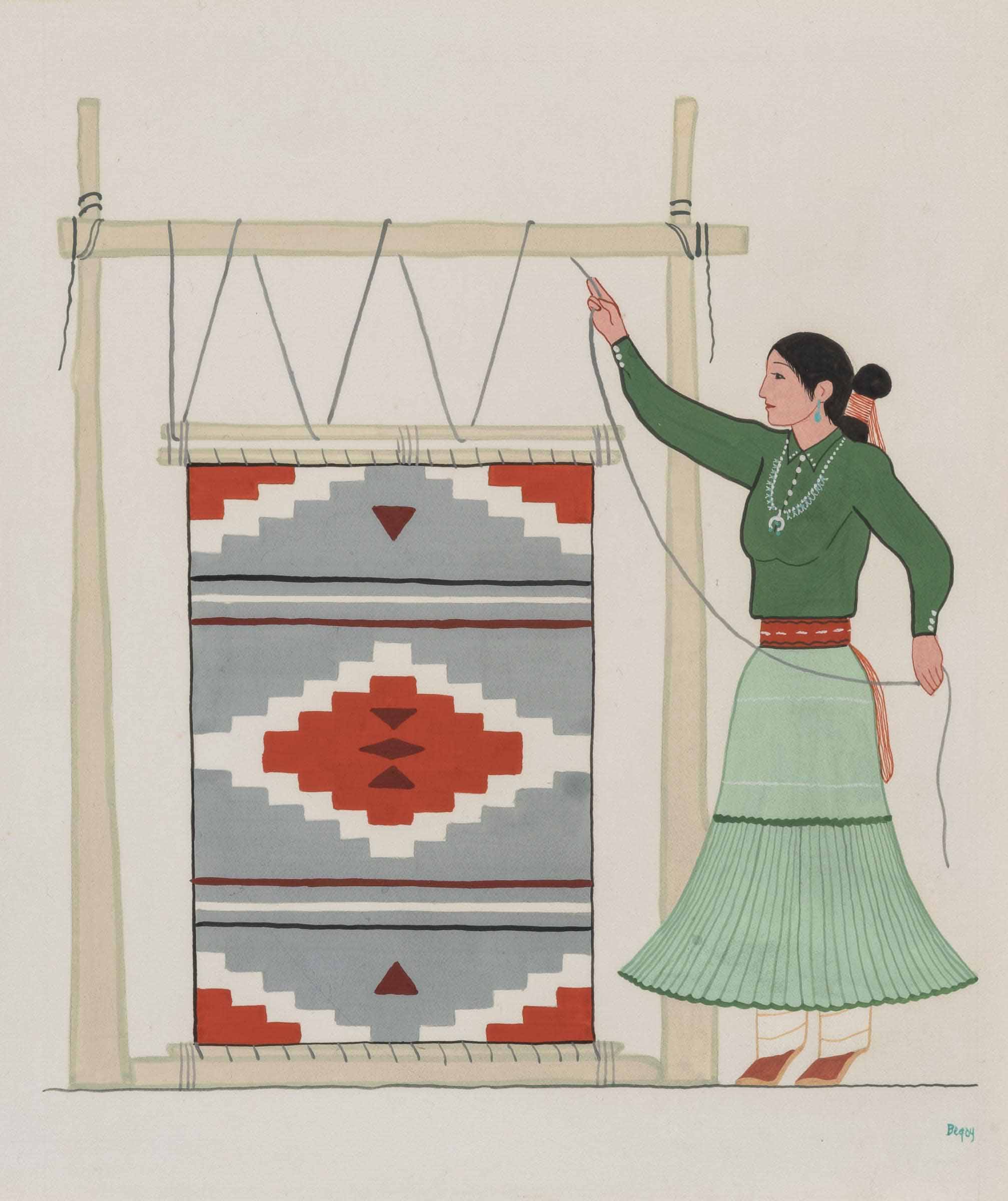
Untitled (Taking Down a Finished Rug) is an excellent example of the problematic Studio Style of Native American painting taught by non-Native art teacher Dorothy Dunn at the Santa Fe Indian School in the 1930s. Harrison Begay (Diné/Navajo) was one of many Native artists initially trained there as a painter. The Studio Style defined Native painting for a generation and its influence is still felt today. It is characterized by formal and conceptual flatness: blank backgrounds, outlined forms, lack of perspective and shading, and an emphasis on “traditional” themes.
Shiprock

Erik Barger had a short career as a painter in New Mexico in the 1940s during which he depicted several iconic natural landmarks in and around the Gallup area, including Shiprock (Tsé Bitʼaʼí—“winged rock”—in Diné/Navajo), a towering geological formation dramatically interpreted by the artist through bold contours and contrasting colors.
Cottonwoods

Józef Bakoś, a leading Santa Fe modernist painter during the first half of the 20th century, is known for painting New Mexico landscapes with loose brushstrokes and vibrant colors.